How to Audit Your Google Ads Ad Copy
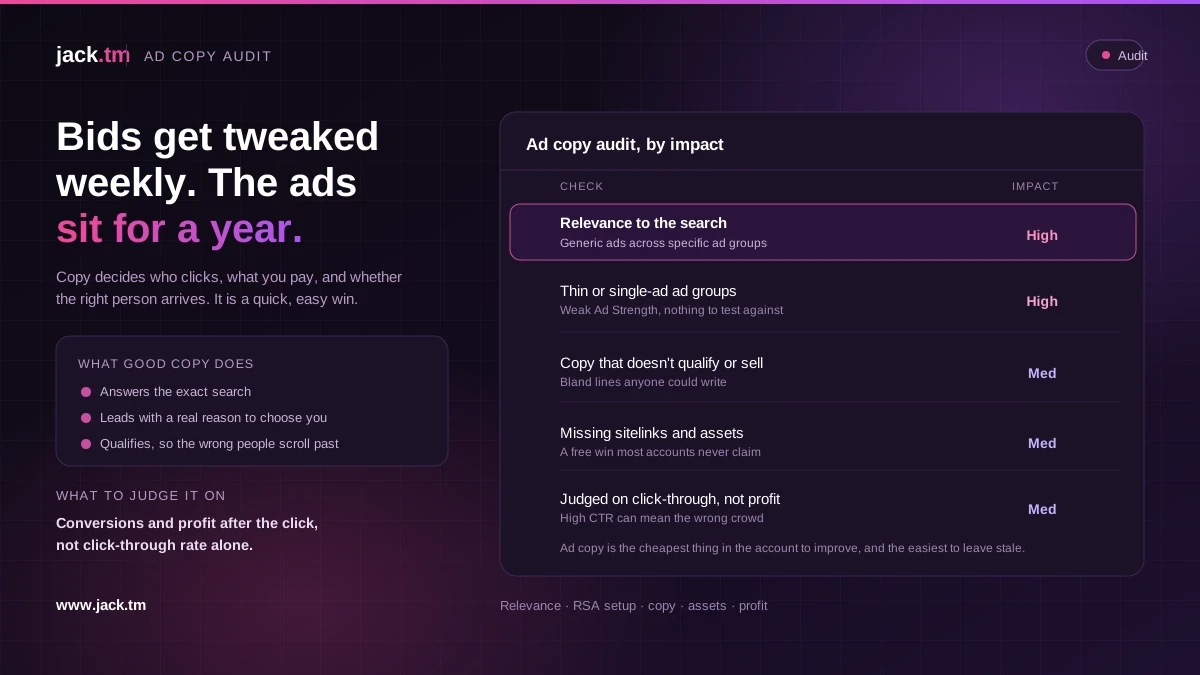
Ad copy is the part of Google Ads most people write once and forget. The bids get tweaked weekly; the ads sit there for a year. That is a mistake, because the copy decides who clicks, what you pay for the click, and whether the right person arrives. An audit of it is quick and usually finds easy wins.
Here is how to audit your Google Ads ad copy, in order.
Check relevance to the search first
The single biggest driver of ad performance is how well the ad matches the search behind it. Go ad group by ad group and ask one question: would someone searching this term feel this ad is a direct answer?
Too often the answer is no. Generic ads run across specific ad groups, the same three headlines recycled everywhere, nothing echoing what the person actually typed. Tightening relevance lifts click-through, improves Quality Score and lowers what you pay to show. It is the first thing to fix because it pays more than once.
Audit the responsive search ad setup
Responsive search ads only work if you give them enough to work with. Check each one for the basics most accounts get wrong.
Are there enough headlines and descriptions, with genuine variety, not minor rewordings? Is Ad Strength at least Good, and are the weak ones flagged as Poor being ignored? Are you pinning sensibly, enough to control the important messages without starving the system of combinations? And is there more than one ad per ad group, so there is something to test against? Thin, single-ad, poorly-fed ad groups are leaving performance on the table.
Check the copy is doing a job, not just existing
Relevance gets the click. The words decide whether it is the right click. Read the actual copy and check it is working.
Does it lead with a real reason to choose you, not a bland “quality service” line anyone could write? Does it qualify, by naming the price, the audience or what makes you different, so the wrong people scroll past? Does it include a clear next step? And does it avoid promising something the landing page does not deliver, which wins the click and loses the sale? Copy that pulls in everyone is an expensive way to attract the wrong people.
Check the assets and extensions
The ad is more than the headlines. Sitelinks, callouts, structured snippets and the rest take up space on the page, push competitors down and give people more reasons to click.
Check they are present, relevant and not left on default. Missing or generic assets are a free win most accounts never claim: they cost nothing to add and they make every ad bigger and more useful.
Then judge it on profit, and test properly
End the audit the same way every audit should end: on what the copy actually delivers. Judge ads on conversions and profit after the click, not on click-through rate alone. A high click-through ad that brings the wrong people is worse than a lower one that brings buyers.
Then set up proper testing. Genuinely different angles, not near-identical lines, left to run long enough to reach a reliable read. Ad copy is not a write-once job. It is the cheapest thing in the account to improve, and the easiest to leave stale.
FAQs
What should a Google Ads ad copy audit check?
Relevance to the search, the responsive search ad setup (headlines, Ad Strength, pinning, more than one ad), whether the copy qualifies and sells, the assets and extensions, and whether it is judged on profit.
Does Ad Strength matter?
It is a useful signal of whether you have given the system enough to work with, not a performance guarantee. Aim for at least Good, but judge the ad on results, not the label.
Should I pin headlines in responsive search ads?
Sparingly. Pin to control the messages that must always show, but over-pinning starves the system of combinations to test. Control the important lines, leave the rest flexible.
How many ads should each ad group have?
At least two, so there is something to test against. A single ad per ad group leaves performance untested and on the table.
How do I know if my ad copy is working?
Judge it on conversions and profit after the click, not click-through rate. A high click-through ad that attracts the wrong people costs more and converts less.