Account Structure Audit: Is Your Account Built to Perform?
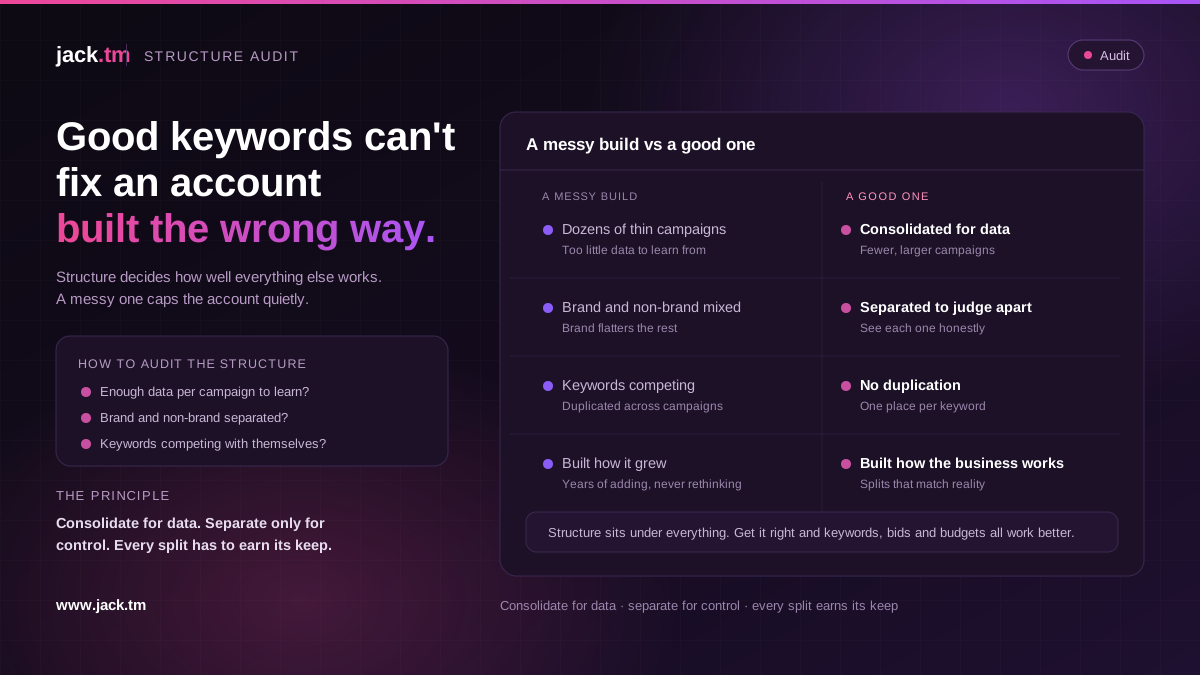
Account structure is the thing nobody notices until it is wrong. It does not show up as a single bad number. Instead it quietly makes everything else harder: the bidding learns slower, the budgets fight each other, the reporting hides what matters. A good audit checks the structure early, because a messy one caps the account no matter how good the keywords and ads are. Here is how to audit yours, the signs of a bad build, and what good looks like now.
Why structure matters more than it used to
It is tempting to think structure matters less in the age of Smart Bidding, since the machine does the heavy lifting. The opposite is closer to the truth. Smart Bidding learns from conversion data, and how you structure the account decides how that data is pooled. Split the same conversions across too many tiny campaigns and each one has too little data to learn from. Lump everything into one and you lose the control to set different goals for different parts of the business.
Structure is really about two things: giving the bidding enough data to learn, and giving you enough control to steer. A good audit judges the structure against both. Too fragmented and the machine starves. Too blunt and you cannot separate the things that need separating, like different margins, different goals, or brand and non-brand.
The signs of a messy build
A few patterns show up again and again in accounts that grew without a plan. Dozens of thin campaigns, each with a handful of conversions a month, none with enough data for the bidding to work well. The same keywords duplicated across several campaigns, competing against each other in the auction. Brand and non-brand mixed together, so the strong brand numbers flatter the weaker non-brand ones and hide what is really happening.
Other tells: campaigns named so inconsistently that nobody can tell what is what, a structure that reflects how the account was built over years rather than how the business actually works today, and budgets set per tiny campaign so money cannot flow to where it performs. None of these is fatal on its own. Together they are the sign of an account that has been added to, never rethought, and is quietly holding itself back.
What a good structure looks like now
The modern answer is simpler than the old one. Where accounts used to be split into many tightly themed campaigns and ad groups, the trend now is towards consolidation: fewer, larger campaigns that give Smart Bidding more data to learn from, with structure used only where it earns its place.
Structure earns its place when it separates things that genuinely need different treatment. Brand and non-brand, because they perform completely differently and should be judged apart. Different goals, like prospecting versus retention. Different margins or priorities, where you want to steer budget deliberately. Different markets with different economics. The principle is to consolidate for data and separate only for control, and a good audit checks the account against that test: is every split earning its keep, or is it just fragmenting the data for no reason?
How to audit the structure
Work through a few questions. Does each campaign have enough conversion volume for the bidding to learn, or is the data spread too thin? Are brand and non-brand separated so you can see and judge them independently? Are the same keywords competing against themselves across campaigns? Does the structure reflect how the business works now, or how the account was built years ago? And is each split there for a reason, separating things that need different goals or budgets, rather than just out of habit?
If the answer to those is messy, the fix is usually consolidation: merge the thin campaigns to pool the data, pull brand out on its own, remove the duplication, and keep only the splits that give you real control. It is one of the higher-leverage things an audit can recommend, because structure sits underneath everything else. Get it right and the keywords, bids and budgets all work better. Get it wrong and you are fighting the account's own shape.
FAQs
Why does account structure matter for Smart Bidding? Because Smart Bidding learns from conversion data, and structure decides how that data is pooled. Too many thin campaigns starve the bidding of data; one giant campaign removes the control to set different goals. Structure balances data and control.
What are the signs of a messy account structure? Dozens of thin, low-data campaigns, the same keywords competing across campaigns, brand and non-brand mixed together, inconsistent naming, and a structure that reflects how the account was built rather than how the business works now.
What does a good Google Ads structure look like today? Consolidated: fewer, larger campaigns that give the bidding more data, with splits used only where they earn their place, like separating brand from non-brand, different goals, or different margins and markets.
Should I separate brand and non-brand? Usually yes. They perform completely differently, so mixing them lets the strong brand numbers flatter the weaker non-brand ones and hides what is really happening. Separating them lets you judge each honestly.
Is more campaigns better? No. More campaigns usually means thinner data per campaign and weaker bidding. The modern approach is to consolidate for data and separate only where you need different control.