The Change History Audit: What's Been Done, and Did It Work?
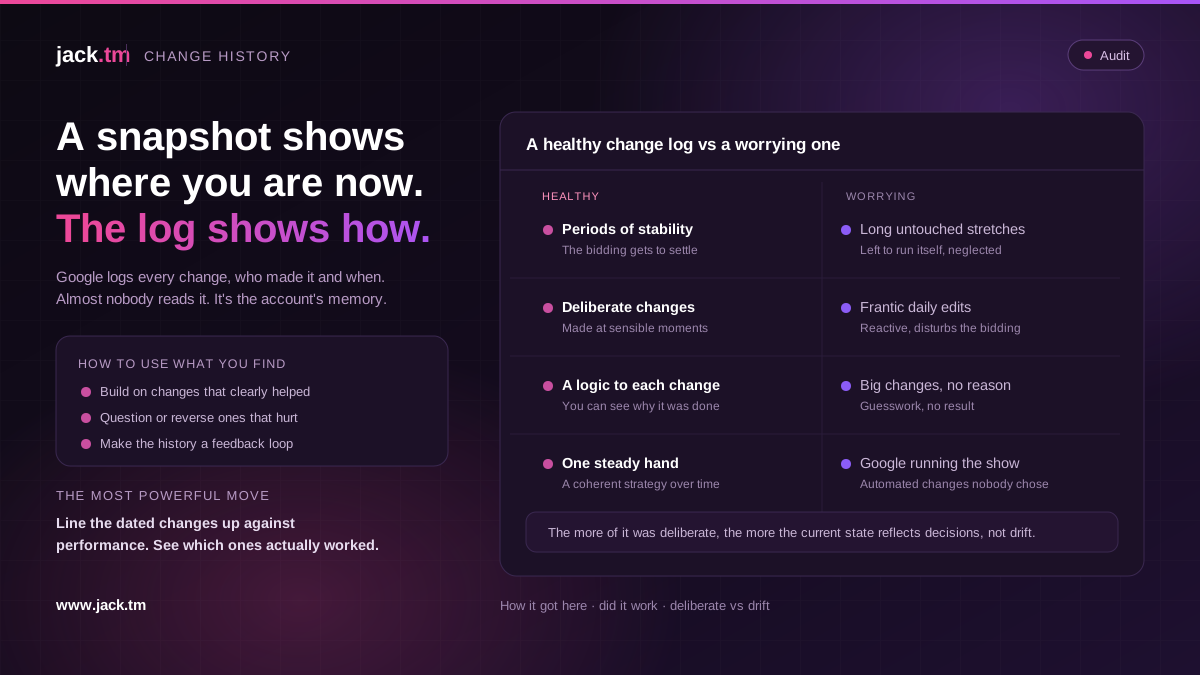
Most audits are a snapshot: here is where the account stands today, here is what to fix. A change history audit asks a different, more revealing question: how did it get here? Google Ads records every change made to an account, who made it and when, and reading that record tells you things the current state cannot. It shows whether the account is being managed well, whether past changes helped or hurt, and where today's problems actually came from. Here is how to audit the change history and what it reveals.
The record nobody reads
Every account keeps a change history: a dated log of what was altered, by a person or by Google's automation. Most people never open it. They look at how the account is performing now and try to improve from there, without asking what was done to produce the current state. That is a missed source of some of the most useful information in the account.
The change history answers questions a snapshot cannot. Is anyone actually working on this account, or has it been left to run itself? Did performance change after a specific edit, or drift on its own? Were the recent changes thoughtful or random? You cannot see any of this from the current settings. You can only see it from the trail of how those settings came to be. Reading that trail is like getting the account's medical history instead of just today's symptoms.
Matching changes to results
The most powerful thing a change history audit does is line up changes against performance. When you can see both the dated edits and the performance over the same period, you can start to tell which changes helped, which hurt, and which did nothing. Performance dropped off a cliff in March? Look at what was changed in March. A campaign suddenly took off? See what preceded it.
This is how you learn from the account's own past instead of guessing. A change that was followed by a clear, sustained improvement is worth understanding and perhaps extending. A change that was followed by a decline is worth questioning, and maybe reversing. Most accounts never do this, so they repeat mistakes and fail to build on what worked, because nobody ever connected the edits to their effects. A good change history audit turns the log into a set of lessons: these moves helped, these did not, here is what the evidence says.
The warning signs in the log
The pattern of changes tells you about the management, not just the account. A few signals are worth watching for. Long stretches of nothing, where the account was clearly left untouched for months, suggest neglect. The opposite, constant frantic edits every day, often suggests reactive tinkering that disturbs the bidding rather than considered management.
Other tells: a flurry of changes right before a review or report, suggesting someone tidied up to look busy; big changes with no apparent reason or result, suggesting guesswork; and a history dominated by automated changes nobody chose, suggesting the account is really being run by Google's auto-apply rather than by anyone. The healthy pattern is considered: periods of stability, deliberate changes at sensible moments, and a visible logic to what was done and when. The change history is one of the clearest windows into whether an account is actually being managed or just occupied.
Who has been in the account
The log also shows who made each change, which matters more than it sounds. An account touched by several different people over time, with no consistency, often shows it: conflicting approaches, changes that undo each other, no single coherent strategy. An account with one steady hand usually reads more cleanly.
It also surfaces how much Google itself has been changing things. If a large share of the recent history is automated changes, the account has been drifting in Google's preferred direction without anyone deciding it should, which is worth knowing and usually worth reining in. A change history audit checks the balance: how much of what happened to this account was chosen by someone with a plan, and how much just happened. The more of it was deliberate, the more you can trust that the current state reflects decisions rather than drift.
How to use what you find
The point of reading the history is to act on it. Where a past change clearly helped, understand why and build on it. Where one clearly hurt, consider reversing it. Where the log shows neglect, the fix is attention; where it shows frantic tinkering, the fix is discipline; where it shows Google running the show, the fix is deciding deliberately what the account should and should not do on its own. And going forward, the lesson is to treat the change history as a feedback loop: make deliberate changes, note them, and check later whether they worked, so the account learns from itself instead of repeating the same moves blindly. Most accounts are managed with no memory of what was already tried. Reading the history gives the account a memory, and that is worth a surprising amount.
FAQs
What is a change history audit? A review of the dated log of every change made to a Google Ads account, who made it and when, read alongside performance. It reveals how the account got to its current state, whether past changes helped or hurt, and how well it is being managed.
Why read the change history? Because the current settings only show where the account is, not how it got there. The history shows whether anyone is working on it, whether specific changes caused performance shifts, and whether the management has been thoughtful or random.
How does it show whether changes worked? By lining up dated edits against performance over the same period. A change followed by a sustained improvement is worth building on; one followed by a decline is worth questioning or reversing. It turns the account's past into lessons instead of guesswork.
What are the warning signs in a change log? Long untouched stretches suggesting neglect, constant daily edits suggesting reactive tinkering, a flurry of changes right before a report, big changes with no reason or result, and a history dominated by automated changes nobody chose.
Why does it matter who made the changes? Because an account touched by many hands with no consistency often shows conflicting approaches and changes that undo each other, while one steady hand reads more cleanly. The log also shows how much Google's automation has been changing things without anyone deciding.