The Takeover Audit: What to Check First on an Account You've Inherited
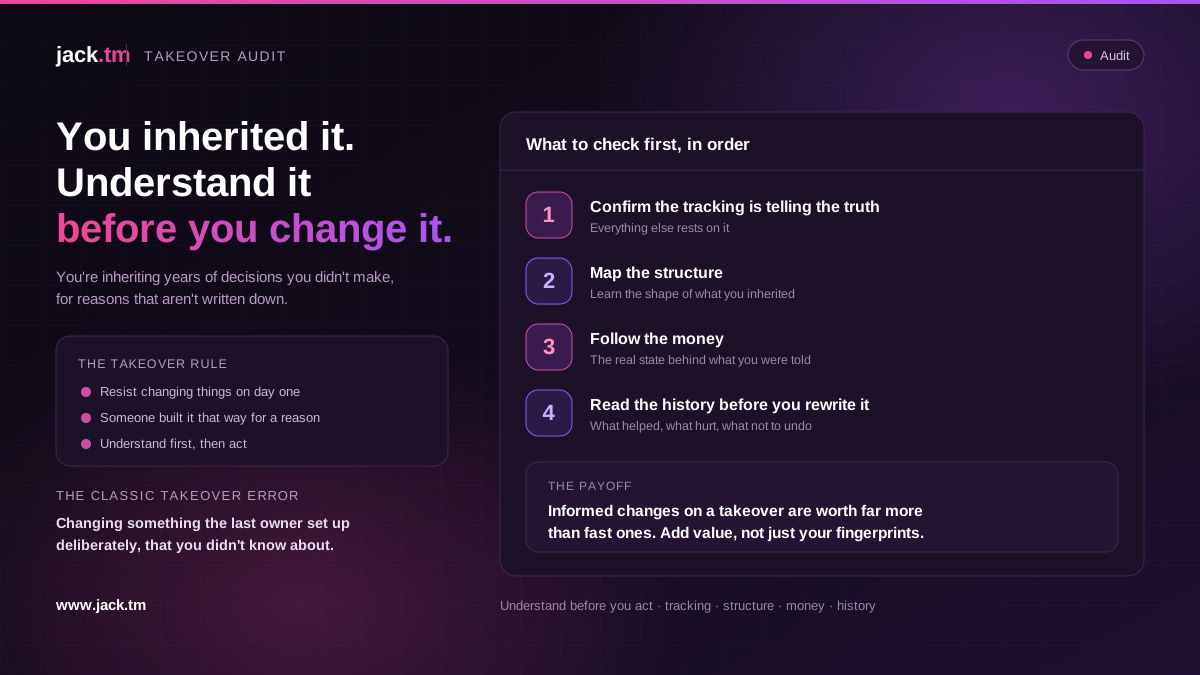
Taking over a Google Ads account someone else built is a specific situation with its own risks. You are inheriting years of decisions you did not make, for reasons that are not written down, and the temptation is to start changing things to put your stamp on it. That is how people break accounts that were quietly working. A takeover deserves its own kind of audit: careful, ordered, aimed at understanding before acting. Here is what to check first on an account you have just inherited, and in what order.
Before anything: understand, don't change
The first rule of taking over an account is to resist the urge to change things immediately. Whatever you are inheriting, someone built it that way, and some of their decisions were probably good ones made for reasons you cannot see yet. Charge in rewriting and restructuring on day one and you risk undoing something that was working, and you will never know, because you changed it before you understood it.
So the takeover audit starts with understanding, not action. The goal of the first pass is to build a picture of what the account is, how it performs, and why it was set up the way it was, before you touch a single setting. The changes come later, once you know enough to be sure you are improving things rather than just making them different. A takeover is exactly the moment when doing less, at first, is the disciplined move.
First, check the tracking is telling the truth
The very first thing to audit is the conversion tracking, before you judge anything else, because everything you are about to look at rests on it. If the tracking is wrong, every number you use to understand the account is wrong too, and you will form a completely false picture of what is working. On an inherited account you have no reason to assume the tracking is sound, so you check it rather than trust it.
Confirm each conversion fires once, that the numbers roughly match the back end or CRM, and that the right actions are being counted, not a signup mislabelled as a sale. This matters doubly on a takeover because you are about to make judgements about the previous owner's work, and you do not want to condemn or praise it based on broken data. Get the tracking confirmed first, and everything else you audit rests on solid ground. Skip it, and your whole assessment of the account could be built on numbers that were never real.
Then understand the structure and the money
With trustworthy data, the next job is to understand how the account is built and where the money goes. Map the structure: how it is organised, whether brand and non-brand are separated, where the budget sits, what the main campaigns are trying to do. You are not fixing anything yet, you are learning the shape of what you inherited, so that when you do change things you understand what you are changing.
Then follow the money. Which campaigns get the budget, and which actually return. This quickly shows you the account's real state behind whatever the previous owner reported: where it is strong, where it is leaking, where budget is misplaced. On a takeover this is also where you calibrate your expectations, because the account's genuine performance, measured on trustworthy data, is often different from the story you were told when you took it on. Understanding the structure and the spend is what turns a pile of unfamiliar campaigns into a map you can actually navigate.
Read the history before you rewrite it
The last step before you start making changes is to read the account's past, because it tells you things the current state cannot. The change history shows what the previous owner did, how often, and whether their changes helped or hurt, which stops you repeating their mistakes or undoing their wins. If performance shifted at some point, the history often shows why.
The search terms report and the segment data tell you what the account has actually been doing and where it has been performing, so you inherit the knowledge rather than starting blind. This is the step that protects you from the classic takeover error: changing something the previous owner set up deliberately, for a good reason, that you did not know about. Once you have understood the tracking, the structure, the spend and the history, you finally know enough to start improving the account rather than just rearranging it. The changes you make then are informed, and informed changes on a takeover are worth far more than fast ones. Understand first, then act, and you add value instead of just adding your fingerprints.
FAQs
What should I check first on an inherited Google Ads account? The conversion tracking, before anything else, because every other number depends on it. On an account you did not build, you have no reason to assume the tracking is sound, so confirm it fires once, matches the back end, and counts the right actions.
Why not just start improving the account straight away? Because someone built it that way for reasons you cannot see yet, and changing things before you understand them risks undoing something that was quietly working. A takeover audit aims at understanding first, then acting, so your changes improve the account rather than just alter it.
What order should I audit a new account in? Confirm the tracking, then map the structure and where the budget goes, then read the change history and the search terms. Each step builds on the last, so by the time you make changes you understand what you are changing and why it was set up that way.
Why read the change history on a takeover? Because it shows what the previous owner did and whether it helped or hurt, which stops you repeating their mistakes or undoing their wins. It also often explains past performance shifts, and it protects you from changing something that was set up deliberately for a good reason.
How does a takeover audit differ from a normal one? It is more cautious and more ordered, because you are inheriting decisions you did not make, for undocumented reasons. The emphasis is on understanding before acting, so you do not break something that was working while trying to put your own stamp on the account.